
Getting custom sheet metal components made right takes more than just cutting metal to size. It takes design review, material knowledge, and a production process that holds tight tolerances from the first part to the thousandth. We’ve guided engineers and procurement teams through this exact process at Newburgh Metals for years, and here’s what actually happens behind the scenes.
What Counts as a Custom Sheet Metal Component?
A custom sheet metal component is any part built to your specific dimensions, material, and application rather than pulled from a generic catalog. That includes brackets, enclosures, panels, and structural parts designed for a unique fit. Standard off-the-shelf parts rarely match exact project requirements.
Custom components let engineers solve problems that generic parts simply can’t address, like unusual mounting angles or tight space constraints.
Why Design Review Matters Before Production Starts
Skipping design review is one of the most expensive mistakes in custom fabrication. A flaw in your CAD file might look fine on screen but fail during bending or welding. Catching that early saves weeks of rework later.
Our engineering team reviews every design in SolidWorks and AutoCAD before production begins. We flag tolerance issues, material thickness problems, and bend allowances that don’t account for real-world spring-back. This step alone prevents most costly errors.
How Material Choice Affects Your Component’s Performance
Not every metal behaves the same way under stress, heat, or moisture, and that’s worth keeping in mind early on. Stainless steel resists corrosion better than mild steel, but it costs more and cuts differently too. Aluminum is lighter, sure, but it has its own bending characteristics that end up changing your design tolerances in ways people don’t always expect.
Choosing the wrong material for your application can lead to premature failure, or just unnecessary cost you didn’t need to take on. That’s really why material selection should happen during the design phase, not after parts are already sitting in production.
What Happens During Sheet Metal Design and Fabrication
Once a design passes review, it moves through cutting, forming, and finishing. Laser cutting or punching creates the flat pattern first. Press brakes then bend the metal into its final shape, following the precise angle and dimension specs laid out in your drawing.
Our 14 bending machines, including five TRUMPF TruBend 5000 series units, use 6-axis back-gauge and angle measuring systems for this stage. That level of accuracy really matters when components need to fit into assemblies with basically zero margin for error.
How Prototyping Speeds Up Custom Sheet Metal Component Manufacturing
Building a prototype before full production catches design flaws that drawings alone can easily miss. It also lets your team actually test fit, function, and finish on a real part instead of guessing based on a rendering. Skipping this step tends to cost more in the long run, even if it feels like it’s saving time upfront.
We turn sample parts around quickly for onsite assembly and testing, which shortens your overall project timeline quite a bit. Fast prototyping just means fewer surprises once full production actually starts rolling.
Why Tolerances and Quality Control Can’t Be an Afterthought
Loose tolerances might be fine for non-critical parts, but they become a real problem for anything that needs to assemble precisely with other components. Inconsistent tolerances between production runs create real headaches too, especially for procurement teams juggling multiple suppliers at once.
Quality control checkpoints throughout the fabrication process catch dimensional drift before parts ship. Ask any potential supplier how often they inspect parts during a production run, not just at the final stage.
What to Expect During Delivery and Turnaround
Delivery timelines really depend on part complexity, quantity, and whatever capacity the shop has going on at the time. A reliable fabricator will give you a realistic timeline upfront and let you know right away if anything shifts along the way. Surprises showing up at delivery time usually mean there was some poor planning earlier in the process that nobody caught.
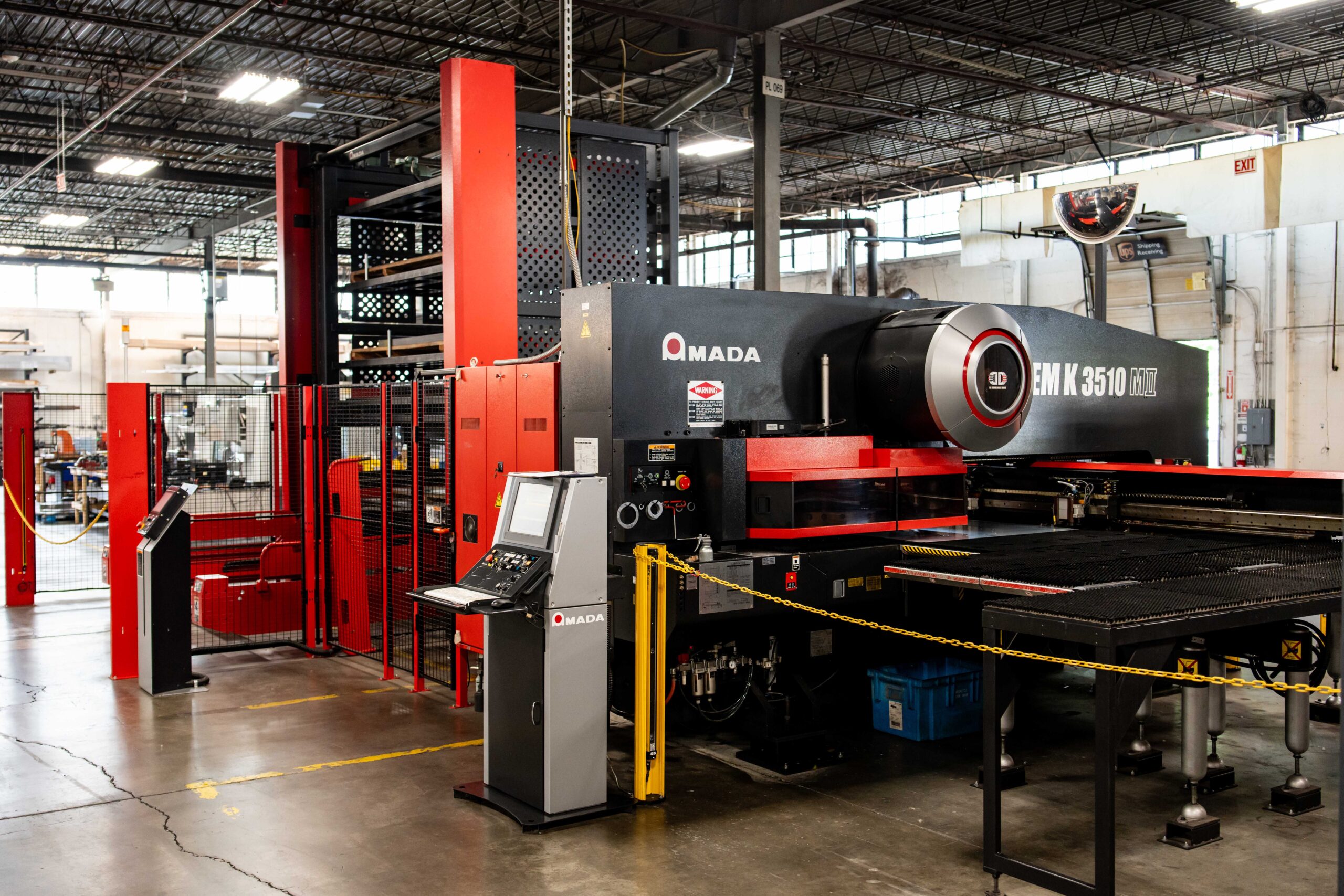
We built our shop around fast turnaround without cutting corners on accuracy. Our automated turret punch presses and laser cutting machines run efficiently, so production doesn’t bottleneck even when the orders get complex.
How Newburgh Metals Supports Custom Component Projects
From the first sketch all the way to final shipment, we stay involved the whole way through. Our engineers catch design issues early on. Our machines hold tight tolerances across full production runs. And we keep you updated at every stage, not just the moments when something’s gone wrong.
That combination is really what turns a one-time order into a long-term supplier relationship. Connect with us today for more queries about our designing and prototyping services.
Frequently Asked Questions
What information do I need to provide for a custom sheet metal quote?
You’ll usually need a CAD file or a detailed drawing, material specification, quantity, and any finishing requirements you have in mind, powder coating or plating, that kind of thing. Tolerance requirements should be noted clearly too. The more complete your specs are going in, the faster and more accurate your quote’s going to be from pretty much any fabrication shop.
How thick can sheet metal be for custom fabrication?
Sheet metal fabrication generally handles thicknesses anywhere from around 26 gauge up to a quarter inch or more, though that depends on the shop’s equipment. Thicker material calls for more powerful press brakes and different cutting approaches altogether. It’s always worth confirming your fabricator’s equipment can actually handle your specific gauge before you finalize a design.
Can custom sheet metal components include welding?
Yes, a lot of custom components need welding to join multiple formed pieces into one finished assembly. Welding capability varies quite a bit from shop to shop, so it’s worth asking specifically about the welding processes they offer, MIG or TIG for example, and whether those welded joints go through a separate quality inspection before final assembly.
How do I know if my design is manufacturable?
A design review from an experienced fabrication engineer will pick up on manufacturability issues, sharp internal corners, bend radii that are too tight, tolerances that go beyond what standard equipment can actually achieve. Getting that review done before committing to production saves you from costly redesigns and wasted material once parts are already being cut.
What finishing options are available for sheet metal parts?
Common finishing options include powder coating, anodizing, plating, and brushed or polished surfaces. Each one affects corrosion resistance, appearance, and cost in different ways. It’s worth talking through your part’s end use with your fabricator, that way they can recommend a finish that actually matches both what the part needs to do and what your budget looks like.