
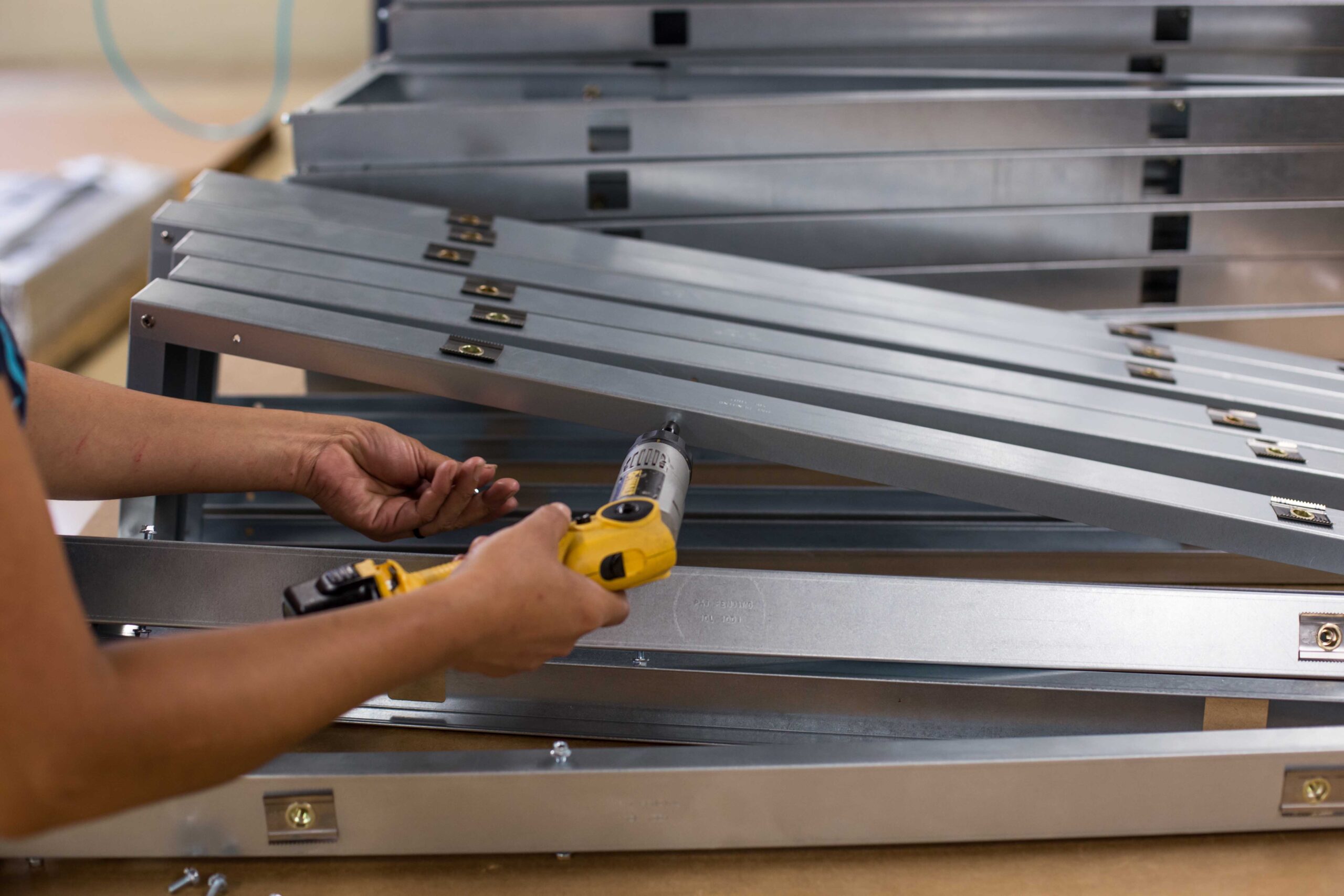
Contract manufacturing is a business arrangement where a company hires an outside manufacturer, known as a contract manufacturer, to produce parts, components, or finished products on its behalf.
Instead of building and running your own factory, you hand over the drawings, specifications, or prototype. The manufacturing partner handles fabrication, machining, welding, finishing, and assembly.
If you run a business in New York and you are trying to figure out how to get a product made, you have probably come across the term contract manufacturing.
The term sounds technical, but the idea is simple. You design it; someone else builds it.
This guide breaks down everything a New York business owner, engineer, or procurement manager needs to know about contract manufacturing.
What Is Contract Manufacturing?
Contract manufacturing is the process of outsourcing the production of goods or components to a third-party company that specializes in manufacturing.
The business that owns the product idea is called the original equipment manufacturer (OEM), or simply the brand owner. This company provides the design, specifications, or a prototype.
The contract manufacturer then takes care of the physical production. They use their own facility, machinery, materials, and skilled labor to bring the product to life.
Think of it like hiring a contractor to build a house. You would not buy your own construction equipment and crew for a single project. You would hire a specialist who already has the tools and experience.
Contract manufacturing works the same way. Except instead of a house, the end product might be a sheet metal enclosure, a machined bracket, a welded frame, or a fully assembled electronic component.
This model is common across many industries. You will find it in electronics, medical devices, automotive parts, HVAC equipment, and custom metal fabrication.
It lets companies focus on what they do best. That could be product design, sales, or customer relationships. Meanwhile, the manufacturing partner focuses on what they do best: production.
How Does Contract Manufacturing Work?
The contract manufacturing process usually follows a clear path from concept to finished product.
Step 1: Design and Consultation
The client shares drawings, CAD files, or a rough concept. Many manufacturers offer design and prototyping support to refine the idea before production begins.
Step 2: Quoting and Material Selection
The manufacturer reviews specifications and recommends materials. They provide a cost estimate based on volume, complexity, and timeline.
Step 3: Prototyping
A sample or prototype is built first. This lets the client test fit, function, and finish before committing to a full production run.
Step 4: Production
Once approved, the manufacturer moves into full-scale production. This stage uses equipment such as laser cutters, punch presses, CNC machines, and press brakes.
Step 5: Finishing and Assembly
Depending on the product, the process may include welding, powder coating, or assembly and integration of multiple components.
Step 6: Quality control and Delivery
Finished parts are inspected against specifications. They are packaged securely and shipped or delivered on schedule.
This structured workflow is what makes contract manufacturing reliable for businesses that need consistent quality at scale.
Types of Contract Manufacturing Services
Contract manufacturing is not a single service. It covers a wide range of capabilities depending on what a business needs.
Sheet Metal Fabrication
Cutting, bending, and forming metal sheets into custom parts and enclosures.
Precision Machining
Using CNC equipment to create parts with tight tolerances.
Welding Services
Joining metal components using MIG, TIG, or spot welding techniques.
Powder Coating and Finishing
Applying durable, corrosion-resistant coatings to metal products.
Assembly and Integration
Combining multiple fabricated or purchased components into a complete product.
Electronics Assembly
Building circuit boards, wiring harnesses, or electromechanical assemblies, often under ETL or UL certification standards.
Design and Prototyping
Engineering support to develop and test a product before full production.
Many manufacturers offer several of these services under one roof. This is often called a turnkey manufacturing solution.
It reduces the number of vendors a business has to manage. It also keeps the entire supply chain in one place.
Benefits of Contract Manufacturing for New York Businesses
New York businesses face high real estate costs, competitive labor markets, and tight delivery expectations. Contract manufacturing addresses many of these challenges directly.
Lower Capital Investment
You avoid the cost of buying laser cutters, press brakes, welding equipment, and other industrial machinery.
Access to Specialized Expertise
Experienced fabricators and machinists bring years of technical know-how. Building that expertise in-house would take time and money.
Faster Time to Market
A manufacturing partner already has equipment and trained staff. This means a much faster move from prototype to production.
Scalability
Whether you need a single prototype or a full production run, a contract manufacturer can flex capacity up or down based on demand.
Consistent Quality Control
Reputable manufacturers follow strict quality standards and industry certifications. This means every batch meets the same specifications.
Reduced Overhead
Outsourcing production means fewer employees to manage. It also means less equipment to maintain and lower facility costs.
Local Supply Chain Advantages
Partnering with a New York-based contract manufacturer shortens shipping times. It also simplifies communication and supports regional business relationships.
Contract Manufacturing vs. In-House Manufacturing
Businesses often weigh contract manufacturing against building their own production capability. Here is how the two compare.
| Factor | Contract Manufacturing | In-House Manufacturing |
| Startup cost | Low. No equipment purchase needed | High. Requires machinery, facility, and staff |
| Speed to production | Fast, using existing capacity | Slower, requires setup and hiring |
| Flexibility | Easy to scale up or down | Harder to adjust quickly |
| Expertise | Access to specialized skills immediately | Requires training or hiring specialists |
| Control | Shared with the manufacturing partner | Full internal control |
| Best for | Startups, seasonal demand, prototypes, mid-size runs | High-volume, highly proprietary production |
For most small- and mid-sized New York businesses, contract manufacturing offers a better balance of cost, speed, and flexibility.
This is especially true when the product involves sheet metal fabrication, machining, or assembly work that requires expensive equipment.
Industries That Use Contract Manufacturing
Contract manufacturing supports a wide range of industries.
Electronics and technology: Enclosures, chassis, and wiring assemblies.
Medical and healthcare equipment: Precision components requiring strict tolerances.
HVAC and industrial equipment: Ductwork, housings, and structural parts.
Transportation and automotive: Brackets, frames, and custom metal parts.
Renewable energy: Solar and battery enclosures, mounting hardware.
Commercial and architectural products: Custom metal fixtures and structural components.
Consumer products: Custom metal goods produced at scale.
Any business that needs durable, precisely manufactured metal components can benefit from working with a contract manufacturer.
This is often smarter than building that capability internally.
How to Choose the Right Contract Manufacturing Partner in New York
Not all manufacturers are the same. It is worth evaluating a few key factors before signing on with a contract manufacturing partner.
Equipment and Capabilities
Look for a shop with modern equipment such as laser and punch presses, computer-guided press brakes, CNC machining, and full welding capabilities. The more services offered under one roof, the smoother your production process will be.
Certifications
For products involving electronics or safety-critical components, certifications like ETL and UL matter. These confirm the manufacturer meets recognized safety and quality standards.
Experience with Your Industry
A manufacturer familiar with your product type will anticipate design challenges. They can also suggest improvements early.
Location and Logistics
A New York-based partner reduces shipping time. It also makes it easier to visit the facility and communicate directly with the production team.
Pricing and Value
Competitive pricing matters. But it should never come at the cost of quality, consistency, or on-time delivery.
Communication and Reliability
Ask about lead times and how delays are handled. Find out whether the company can expedite orders when needed.
Cost Considerations in Contract Manufacturing
Pricing for contract manufacturing depends on several factors.
Material type and thickness: Different metals and gauges affect cost.
Complexity of design: Intricate cuts, bends, or welds take more time.
Order volume: Larger runs typically lower the per-unit cost.
Finishing requirements: Powder coating or specialized finishes add cost.
Tolerances and precision: Tighter tolerances require more advanced machinery and inspection.
Assembly needs: Integrating multiple parts into a finished product adds labor time.
A transparent manufacturer will walk you through a detailed quote. You should understand exactly what you are paying for, with no surprise charges later in the process.
design, fabrication, and assembly under one roof usually shortens overall lead time.
Work with a Trusted Contract Manufacturer in New York
If you are ready to move from concept to finished product, Newburgh Metals is here to help.
As a New York-based contract manufacturer, Newburgh Metals offers design and prototyping, sheet metal fabrication, precision machining, welding, powder coating, and full assembly and integration. All under one roof.
With state-of-the-art laser and punch presses, computer-guided press brakes, and ETL and UL certified capabilities, Newburgh Metals delivers consistent quality.
You receive competitive pricing and reliable on-time performance.
Whether you need a single prototype or a full production run, the team at Newburgh Metals is ready to help you achieve your goals.
Request a quote today and discover why New York businesses trust Newburgh Metals as their go-to contract manufacturing partner.
75 Pierces Road, Newburgh, NY 12550 | info@newburghmetals.com | +1 (845) 565-7222
Frequently Asked Questions
Is contract manufacturing the same as outsourcing?
Contract manufacturing is a specific type of outsourcing focused on physical production. This differs from outsourcing services like customer support or IT.
Do I need a large order to work with a contract manufacturer?
No. Many manufacturers support everything from single prototypes to full production runs. This makes the model accessible for startups and small businesses too.
Who owns the intellectual property in a contract manufacturing agreement?
Typically, the client retains ownership of the design and intellectual property. The manufacturer is responsible only for production. This should always be clearly outlined in a signed agreement.
How long does contract manufacturing take?
Timelines vary based on complexity and volume. Working with a manufacturer that has